
The Conservation Concertos
are a set of works for solo instrument and orchestra being written over the next decade, each about a different nearly-extinct flora or fauna, or environmental concern: a subject close to its soloist’s heart.
The Conservation Concertos include works…
with Anthony McGill for clarinet + orchestra
about the Nautilus
with Tammy Miller for piano + orchestra
about Nearly-Extinct Flowers
with Masumi Rostad for viola + orchestra
about Pernambuco/Brazilwood
with Tommy Mesa for cello + orchestra
about Plastics
with Tommy Mesa for cello + orchestra
about Plastics
with Marie Bennett for flute + orchestra
about Manta Rays
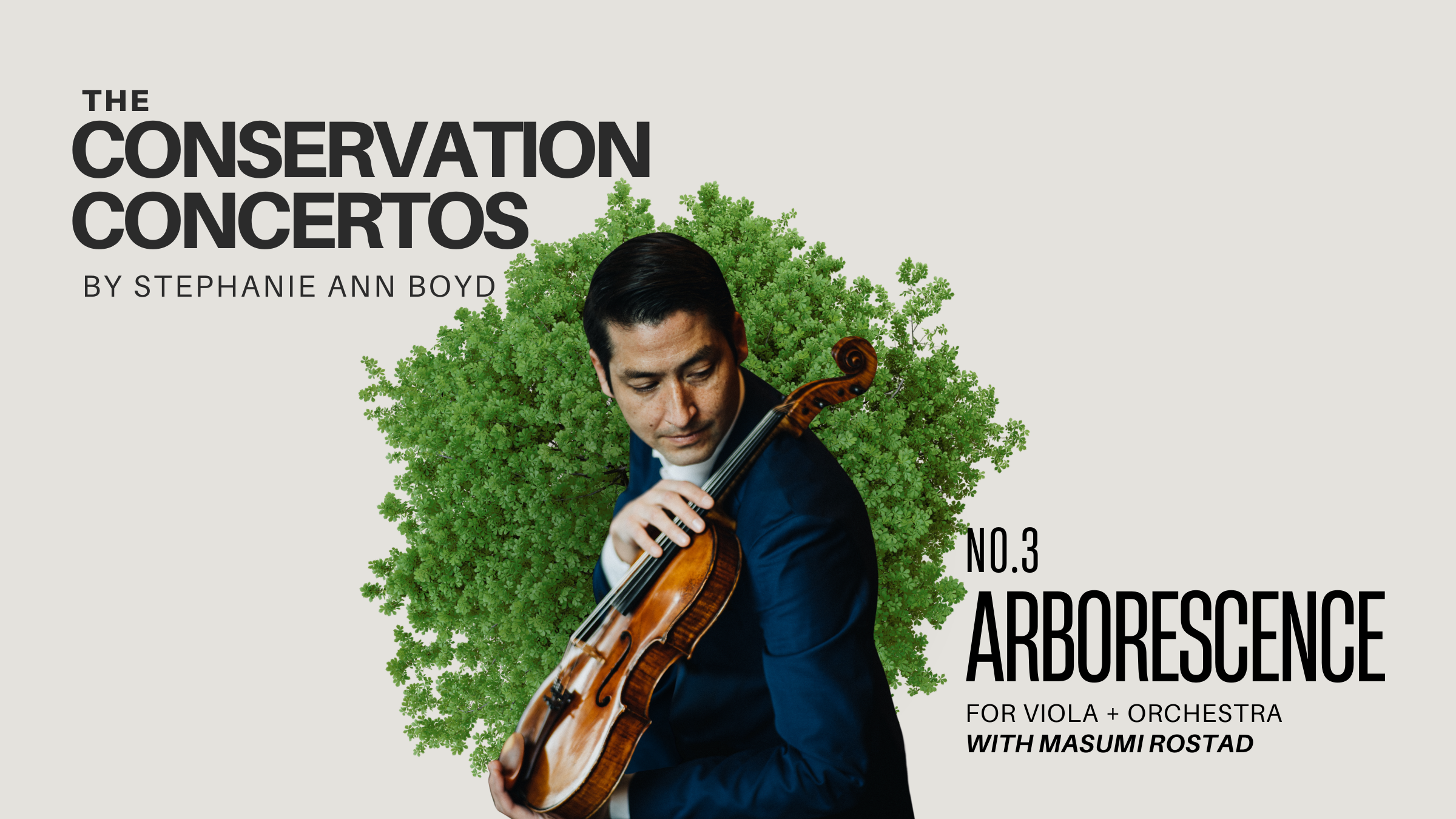
ARBORESCENCE
is a viola concerto for Masumi Rostad centered on pernambuco (Paubrasilia echinata), the endangered Brazilian tree whose wood has long shaped the sound of the modern bow. The piece follows the tree as it grows, connects, and is transformed, from root systems in the soil to the unseen networks that support it, and eventually into human hands. What emerges is a portrait of interdependence, where the same branching logic binds forest, instrument, human, and the systems that surround them.
About PERNAMBUCO
Pernambuco (Paubrasilia echinata) is a hardwood tree native to Brazil’s Atlantic Forest and has been the preferred material for high-quality string instrument bows for over two centuries due to its unique strength, density, and elasticity.
Beginning in the 16th century, the tree was heavily harvested for its red dye, and later for bow making, leading to significant population decline alongside widespread deforestation of the Atlantic Forest, of which only about 10–15% of its original extent remains today.
While pernambuco was once abundant along Brazil’s coastline; it is now classified as endangered, with natural populations fragmented and reduced. Conservation efforts are underway, including replanting initiatives and regulated harvesting, but the timeline of recovery is long: the material foundation of the string sound world now depends on a tree that does not return on human timescales.
THE People
Masumi Rostad
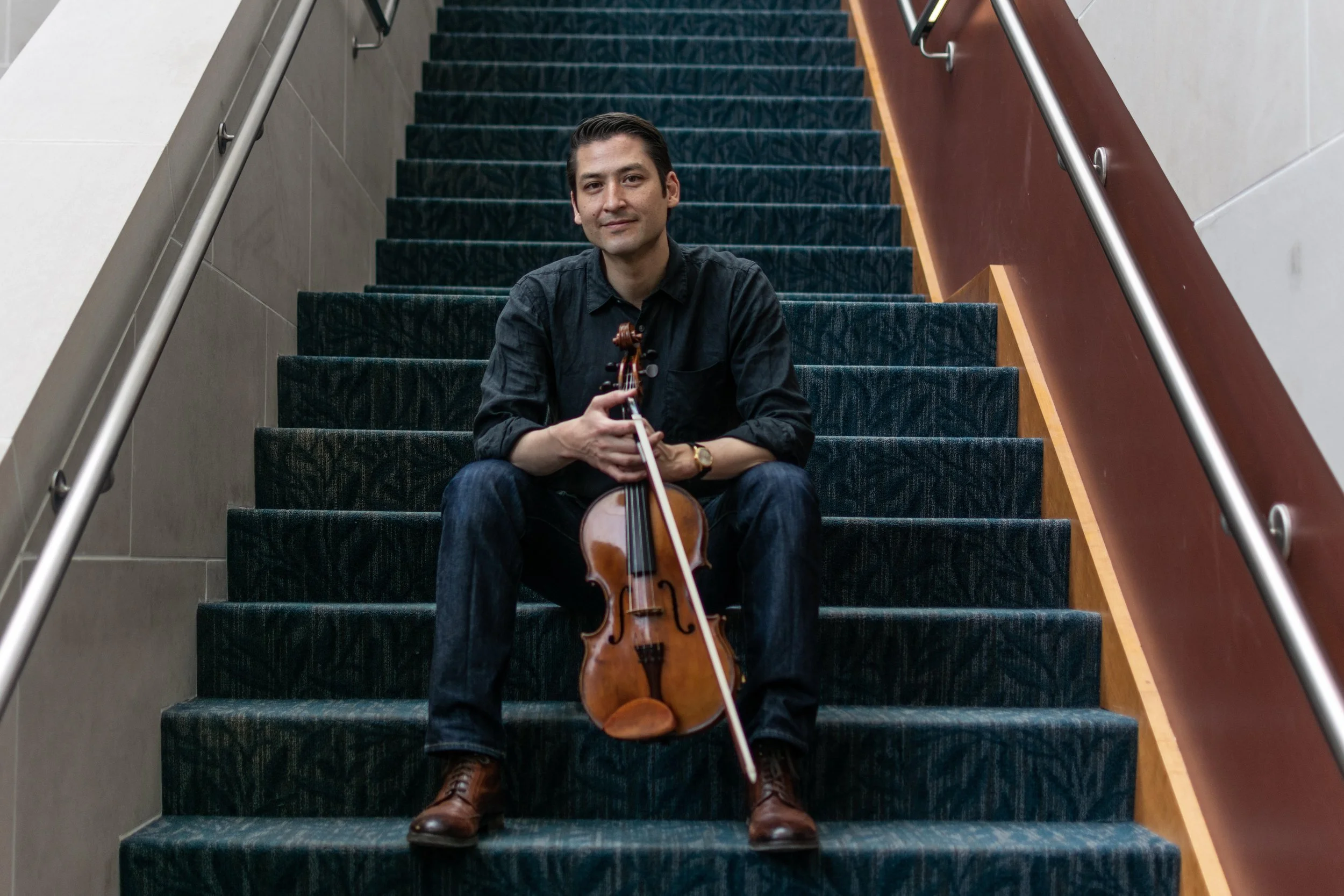
Praised for his “burnished sound” (The New York Times) and described as an “electrifying, poetic, and sensitive musician,” the Grammy Award-winning, Japanese-Norwegian violist Masumi Rostad hails from the gritty East Village of New York City. He was raised in an artist loft converted from a garage with a 1957 Chevy Belair as the remnant centerpiece in his family’s living room. Masumi began his studies at the nearby Third Street Music School Settlement at age three and has gone on to become one of the most in demand soloists, chamber musicians, and teachers. In addition to maintaining an active performance schedule, he serves on the faculty of the prestigious Eastman School of Music in Rochester, NY.
Recent performance highlights include concerto performances with the Los Angeles Chamber Orchestra, Grant Park Symphony Orchestra, and The Knights. Festival appearances include La Jolla SummerFest, Marlboro, Caramoor, Bowdoin, Aspen Music Festival, Beare’s Premiere Performances in Hong Kong, Bridgehampton Chamber Music Festival, Spoleto USA, Music@Menlo, and Music In the Vineyards. In 2025, he performed an all-Shostakovich program with pianist Evgeny Kissin and the Kopelman Quartet at Carnegie Hall and the Lucerne Symphony Orchestra Piano Festival. His guest violist collaborations include programs with the Miró, Ying, Pavel Haas, Verona, St. Lawrence, and Emerson String Quartets, as well as with the Horszowski Trio. He toured and recorded extensively as a former member of the International Sejong Soloists. Masumi can be heard on the Cedille, Naxos, Hyperion, Musical Observations, Bridge, and Tzadik record labels.
Masumi is a D’Addario Artist and has used their strings since 1999. His Brothers Amati viola was crafted in Cremona, Italy in 1619.
Stephanie Ann Boyd
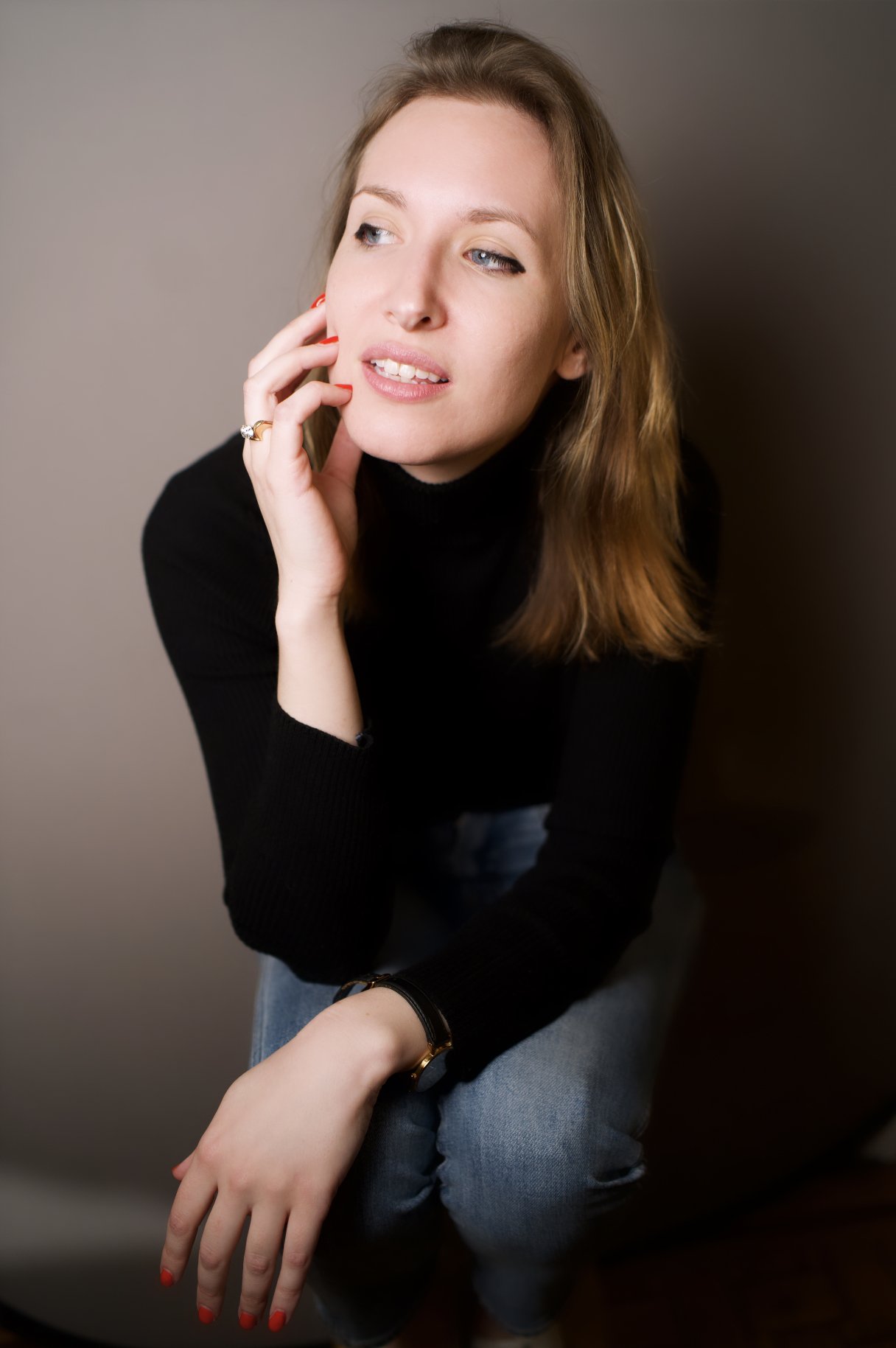
Michigan-born, Manhattan-based American composer Stephanie Ann Boyd writes music about women’s memoirs and the natural world for symphonic and chamber ensembles. Her work has been performed in nearly all 50 states and has been commissioned by musicians and organizations in 37 countries. Boyd’s five ballets include works choreographed by New York City Ballet principal dancers Lauren Lovette and Ashley Bouder and include a ballet commissioned for the grand opening of the TWA Hotel at JFK Airport. Stephanie’s music has been praised as “a racing, brassy score” (New York Times), “attractive lyricism” (Gramophone), “[with] ethereal dissonances” (Boston Globe), “[music that] didn’t let itself be eclipsed” (Texas Classical Review), and “arrestingly poetic” (BMOP).
Recent commissions and premieres include a work inspired by Betty Friedan entitled Everywoman, with Kennedy Center President Deborah Rutter, mezzo-soprano Michelle DeYoung, and 2022 Indianapolis Competition winner Sirena Huang as soloists and commissioned by the Peoria Symphony Orchestra with George Stelluto; Julia Louisa Esther: a Suffragette Symphony commissioned by the Wyoming Symphony Orchestra with Christopher Dragon, the premiere of which was the subject of a documentary on Wyoming PBS in 2022; Alleluia Olora commissioned by Astral Artists for cellist Tommy Mesa; Aurora, commissioned by the Kurganov-Finehouse Duo, and others.
THE MUSIC
THE MOVEMENTS
I. Pastoral: Emergence
The concerto begins with the emergence of a seed, slowly unfolding ring by ring into a body of living wood. In sun and rain and soil, the tree grows upward as a dark pastoral takes shape in the strings alone, their instruments forming an entire forest on stage. As the tree reaches maturity, the solo viola draws it fully into being, and the players’ sounds and footfalls begin to activate the hall, allowing audiences to become aware of the wood all around them and turning the architecture itself into resonance, breaking this forest’s fourth wall.
II. Meditation: the undersong
This movement moves below the surface, descending into the dark hum of the root network and mycelial web. Low, sustained textures and distant signals create a continuous field that references the Schumann Resonance (the pitch of the Earth itself) as the solo viola leads us into a musical meditation that stretches time and reveals the vast, patient connections just beneath our feet.
II. Toccata: arborescence
The orchestra unfolds in rapid, branching figures that proliferate across the ensemble, visually and sonically tracing the logic of arborescence: growth, distribution, and consequence. The solo viola engages the material at its most physical, exposing and celebrating the mechanics of the bow. Gestures of cutting and fracture threaten the forest system, but the underlying network persists, revealing a structure that cannot be fully broken.
length
19-25 minutes
instrumentation
Version A: 2.2.2.2./2.3.2.1./timp + 4/harp, celeste, solo flute, strings
Version B: strings (min 44331) + percussion + solo flute